
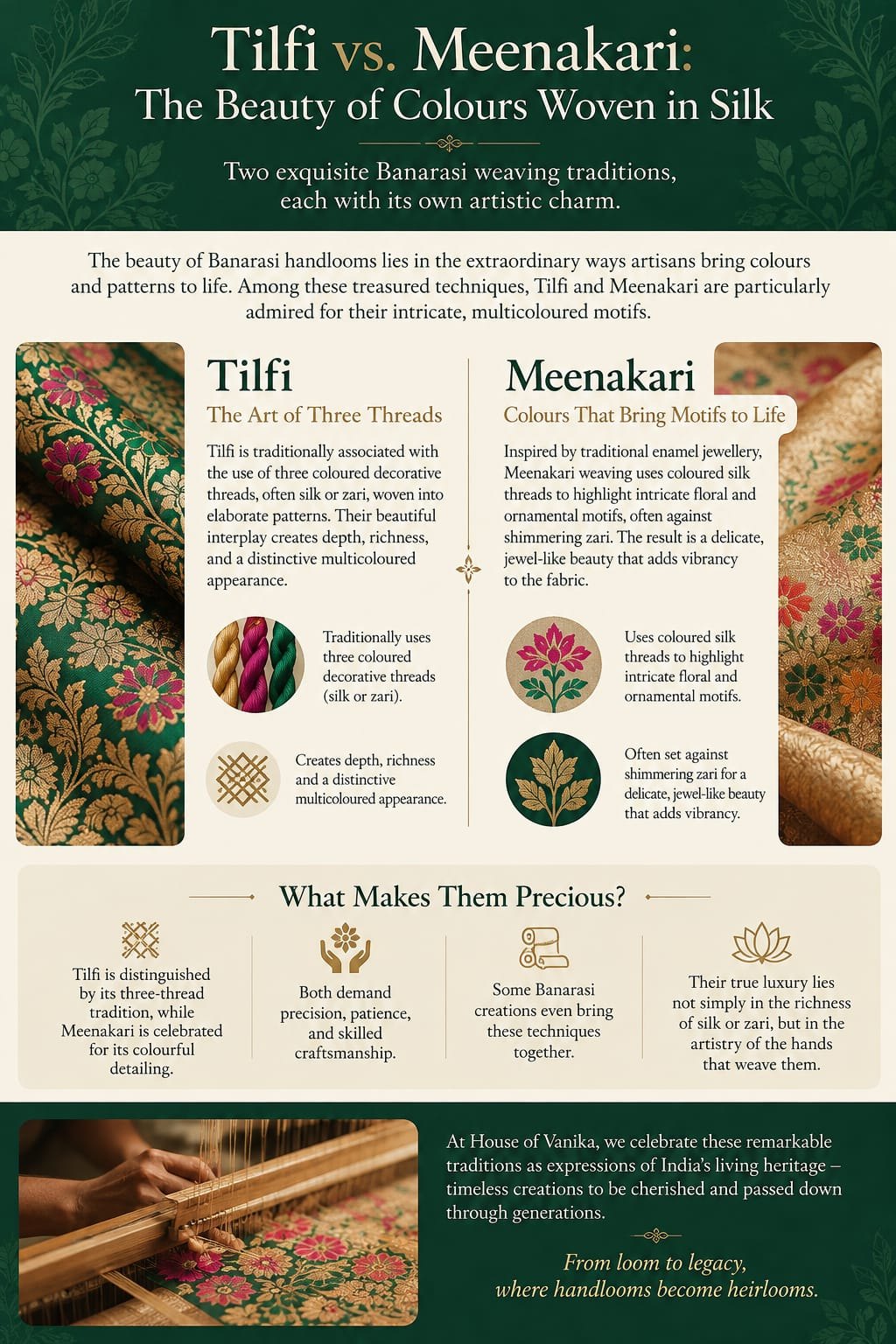
The beauty of Banarasi handlooms lies in the extraordinary ways artisans bring colours and patterns to life. Among these treasured techniques, Tilfi and Meenakari are particularly admired for their intricate, multicoloured motifs.
Tilfi: The Art of Three Threads
Tilfi is traditionally associated with the use of three coloured decorative threads, often silk or zari, woven into elaborate patterns. Their beautiful interplay creates depth, richness, and a distinctive multicoloured appearance.
Meenakari: Colours That Bring Motifs to Life
Inspired by traditional enamel jewellery, Meenakari weaving uses coloured silk threads to highlight intricate floral and ornamental motifs, often against shimmering zari. The result is a delicate, jewel-like beauty that adds vibrancy to the fabric.
What Makes Them Precious?
While Tilfi is distinguished by its three-thread tradition, Meenakari is celebrated for its colourful detailing. Both demand precision, patience, and skilled craftsmanship. Some Banarasi creations even bring these techniques together.
Their true luxury lies not simply in the richness of silk or zari, but in the artistry of the hands that weave them.
At House of Vanika, we celebrate these remarkable traditions as expressions of India's living heritage — timeless creations to be cherished and passed down through generations.
From loom to legacy, where handlooms become heirlooms.